Shade and lot mix-ups
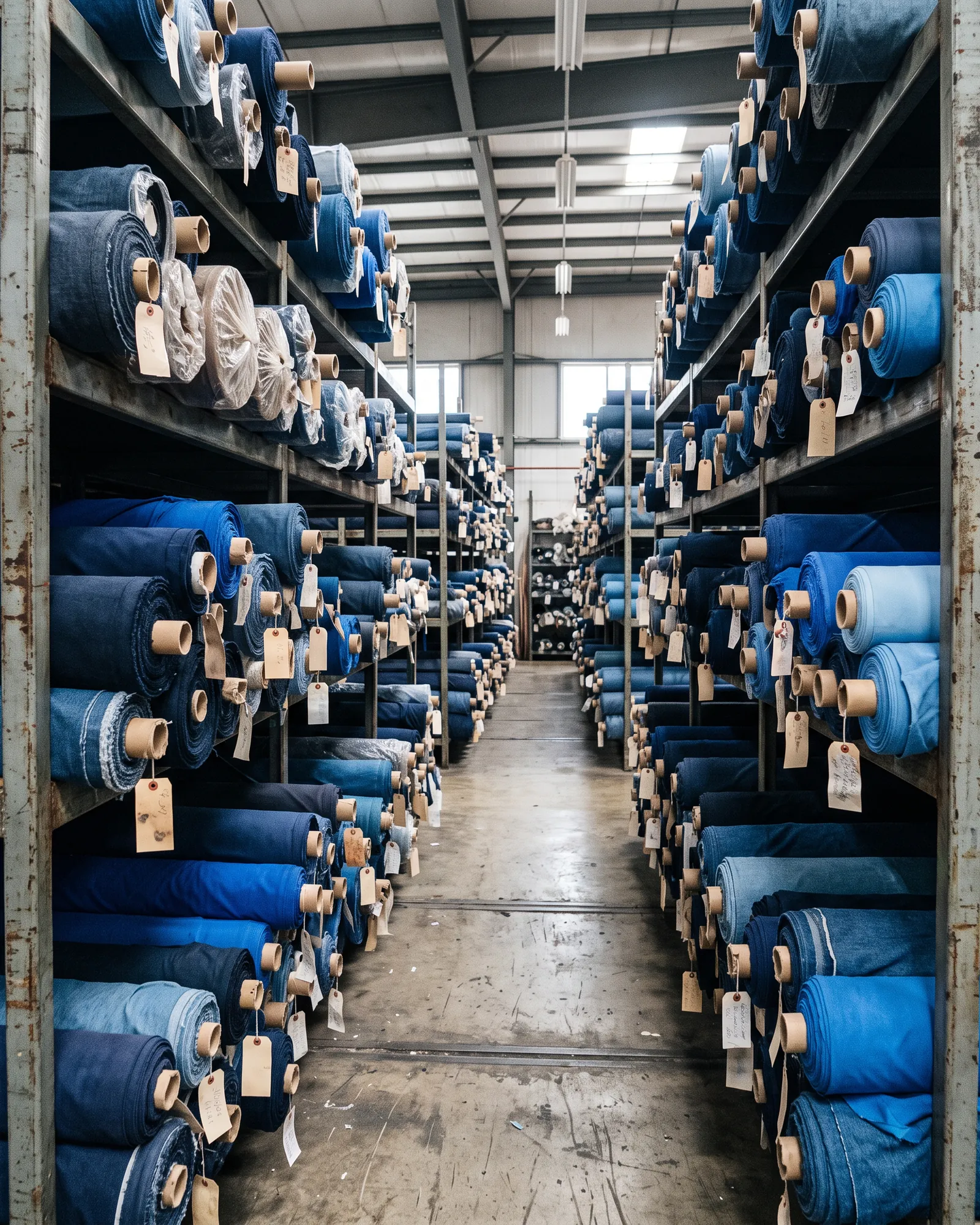
A roll from the wrong lot reaches the cutting table. The difference shows after sewing, when panels from two shades meet in one garment.
 Discuss a requirement
 Order 7716 · Line 4Cut 1,200 · Dried 1,18812 pieces missing
Apparel production tracking
Every roll, bundle and garment is tracked through cutting, sewing, washing, finishing and packing, so shortages and wrong shipments are found while they can still be fixed.
One order, stage by stage
The same order seen from fabric store to packing. When a count drops, the stage and the time are already known.
Where garment factories lose control
The cost rarely appears as one line: re-cuts, overtime, late shipments, buyer chargebacks and the audits that follow them. It starts with a handover where nothing is recorded.
A roll from the wrong lot reaches the cutting table. The difference shows after sewing, when panels from two shades meet in one garment.
Cutting, sewing, washing and finishing each keep their own count. When the order reaches packing short, nobody can say where the pieces went.
Line output and defects are counted at the end of the day, hours after anyone could have acted on them.
The carton count matches the packing list; what is inside does not. The buyer finds it at their distribution centre and charges it back.
Apparel
Each stage reads the same identity instead of creating its own count.
Every roll located by rack, with shade and lot.
The right shade reaches the cutting table.
Bundles counted out in bulk.
50 bundles out, 50 bundles in.
Output by operation, during the shift.
The bottleneck seen within the hour.
Every piece counted in and out of each stage.
The 12 missing pieces traced to drying.
Washable tag swapped for the buyer's hangtag.
Tags reused, lot after lot.
Every carton checked against its order.
The wrong size mix stopped before sealing.
Every carton matched to the right container.
Proof for the buyer of what left.
Delivery read at the door.
Shortages found the same day.
Every stage, one record
Each stage reads the same identity instead of creating its own count. Start with the stage where you lose the most; the others connect to the same record when you are ready.
Every roll, its shade, its lot and its rack.
The right shade and lot at every cut.
Bundles counted out in bulk, not by hand.
The count that leaves cutting is the count that reaches sewing.
Output, quality and machines, while the shift is running.
Bottlenecks and defects seen within the hour, and fair piece-rate wages.
Every piece counted in and out of every stage.
Shortages traced to the stage where they happened, the same day.
Your tag hands over to the buyer's.
Buyer-ready tagging, with tags reused lot after lot.
Every carton checked before it is sealed.
Up to 99% accuracy at the verification stage, and proof for every shipment.
Sewing line
Plan against output on one line through one shift. Live data shows the gap within the hour; the end-of-day sheet shows it at 17:00, when the shift is over.
Washing and finishing
Stage-by-stage counts show where the pieces were lost, the same day.
What your team sees
Planners, line supervisors, quality, washing and shipping see the same record, each from their own view. Results flow into your ERP and buyer reports, so nobody re-types a count.
Every order by stage: cut, sewn, washed, finished, packed.
Pieces by line, operation and operator, against plan, during the shift.
Defects by type, operation, operator and style, inline and end-line.
What sits between stages, and for how long.
Pieces in and out of every processing stage, with the shortage marked.
Rolls by rack, shade and lot, with issues and returns.
Every carton verified, by order and buyer, with exceptions held.
Repairs, response times and maintenance due, by machine.
Packing and dispatch
Every carton is read against its packing list and size ratio before it is sealed. The wrong one is held while it can still be corrected.
Return on investment
Change the numbers to match your operation. The starting values are hypothetical.
Scenarios
Three situations from garment manufacturing and export, with the arithmetic behind them. The numbers are assumptions; replace them with your own.
Scenario 1
A garment exporter packs 1,000 cartons per container, each with a size ratio set by the buyer.
Cartons are checked by sample before sealing. The buyer's distribution centre finds wrong size mixes and charges back the cost of re-sorting at destination labour rates.
Each carton is verified against the packing list before sealing: count, style, size and colour. The record for every carton is shared with the buyer.
1 carton in 200 wrong is 5 cartons per container. Found at the factory, each costs a few minutes. Found at destination, each becomes a chargeback, and a reason to audit every shipment you send.
Scenario 2
A denim order of 1,200 pieces goes through washing, drying, pressing and finishing, partly at an outside washing unit.
Every stage counts by hand. The order reaches packing 12 pieces short; the factory re-cuts and re-sews to complete the shipment.
A washable tag is read in and out of every stage. The record shows the 12 pieces left drying but never reached pressing, and they are found the same day.
12 pieces re-cut and re-sewn, plus the delay to the shipment, cost far more than the pieces. Traced the same day, they cost a search.
Scenario 3
A sewing line plans 800 pieces for the shift; output is entered on a sheet at the end of the day.
A bottleneck slows the line from mid-morning. The evening count shows 742 pieces and the order is behind.
Bundle cards are read at every workstation. The supervisor sees the bottleneck within the hour and balances the line.
Recovering 40 pieces a day on 10 lines over 25 working days is 10,000 pieces a month.
Getting started
You see the result in your own factory, with agreed measures, before the rest of the floor follows.
We follow one order from the fabric store to the carton with your team, and mark every handover.
Read accuracy, time saved, shortages caught and output visibility, measured before anything changes.
The fabric store, one sewing line, one washing unit or the packing area.
Orders and styles from your ERP; results back into it and into buyer reports.
More lines, more stages, more factories, on the same record.
Each stage in more detail: Fabric roll and cutting · Stitching line · Washing and processing · Packing and dispatch
Next step
We will map where the count is lost, what it costs and what would change, stage by stage.