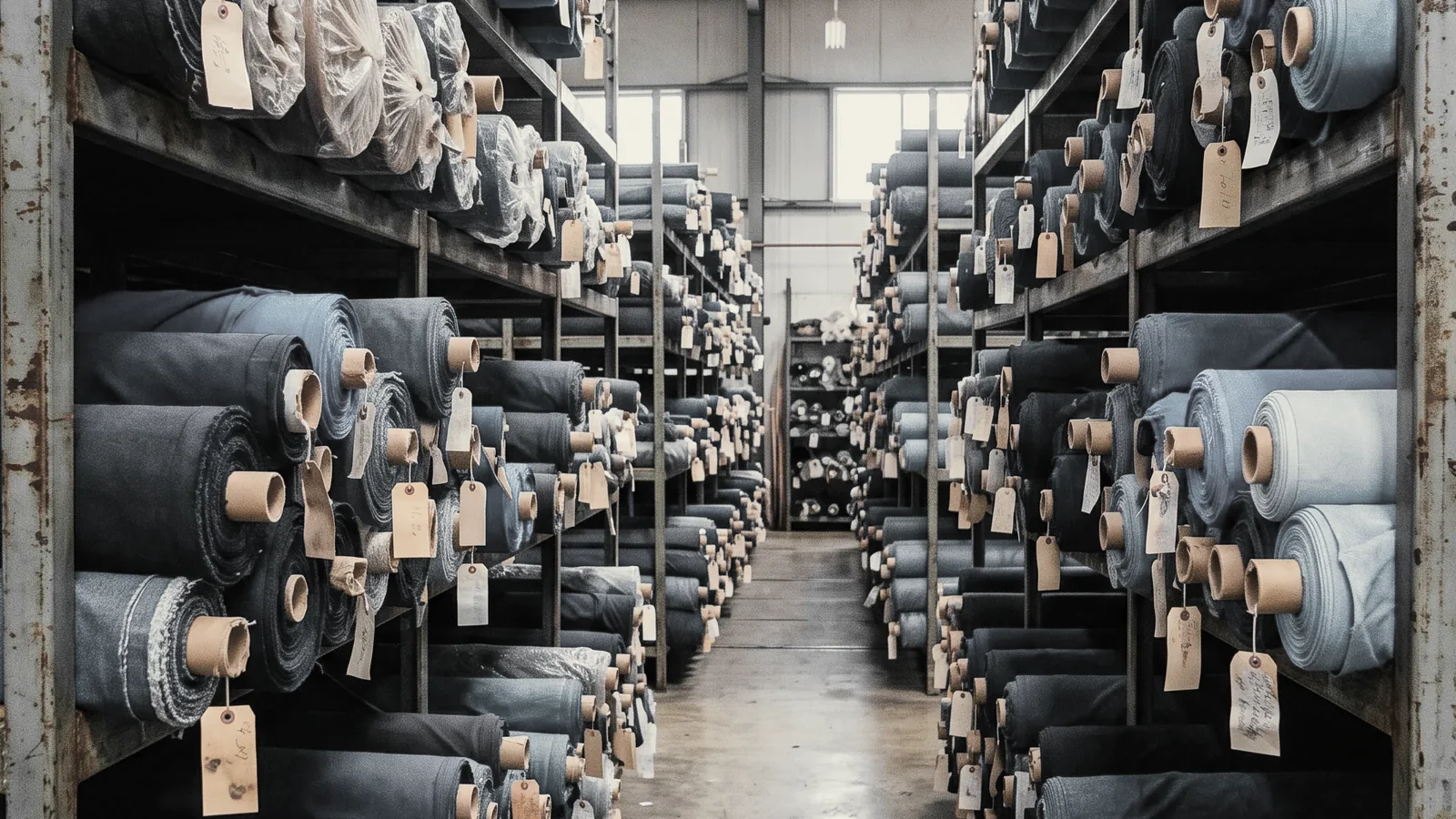
A fabric store holds thousands of rolls. Each has a shade, a lot and a length remaining, and the cutting room needs the right ones, now.
In most factories, rolls are located by memory, by paper registers, or by scanning a QR label one roll at a time. All three break down as the store grows.
The cost of the search
Assume a store of 2,000 rolls. Scanning each roll by hand takes about 10 seconds, including finding the label and turning the roll. A full count is about 5.5 hours of scanning, before any correction. So full counts are rare, and the record drifts between them.
The bigger cost is quality. When a roll of the wrong shade or lot reaches the cutting table, the defect only shows after sewing, when panels from two shades meet in one garment. Eighty garments cut from the wrong roll is a re-cut, a delay and sometimes a missed shipment.
Reading the rack, not the roll
The approach that works is to tag both the roll and its location:
- At receiving, each roll gets a printed label with a QR code and a tag. The tag is linked to the roll's shade, blanket and lot in the system.
- Each rack carries its own location tag. When a rack is read, the reader records the rack and every roll on it in one pass.
- When rolls are issued to cutting, they pass a reading point at the store door and are checked against the cutting requisition. The wrong shade or lot is stopped before it leaves.
- When rolls come back from cutting, they are read back in with the metres remaining.
What changes
- A live view of the store, rack by rack, without daily counts.
- The right shade and lot at every cut, checked automatically.
- Every issue and return accounted for, including part-rolls.
- Faster planning: the cutting room can see what is really available.
Where to start
Start with issues to cutting. It is the handover where a mistake costs the most, and the one where a check at the door pays back fastest. Rack-level location can follow.