Most fleets know where every vehicle is. Far fewer know what is on it, whether it was delivered, and why it has been standing still for an hour.
13 Nov 2026 · 2 min read · Zorsan
Most fleet operations already have GPS. They can see every vehicle as a dot on a map.
And yet the questions that matter most are still answered by phone calls: Has the delivery been made? Why is the truck standing at that site? Did the driver take the right load? Is the cold chain intact?
A dot is not an operation
Location tells you where the vehicle is. It does not tell you:
What is on it: the right load, for the right route.
What happened at each stop: delivered, refused, partial, or not attempted.
Why it stopped: unloading, waiting for a gate, or an unplanned break.
What condition the goods are in: temperature, door openings, shocks.
So dispatchers spend their day calling drivers, and customers spend theirs calling dispatchers.
Fleet and mobile assets
One route, every stop accounted for.
Each stage of a delivery day is compared with the plan, so the exception reaches the dispatcher first.
The route plan
01
Plan
Stops and time windows come from your order system.
Looks like
600 stops planned for 40 vehicles.
02
Load
The right load on the right vehicle.
Looks like
The wrong cage stopped at the dock.
03
Depart
The vehicle leaves on time, or the delay is visible.
Looks like
A late start flagged at 07:40.
04
Stop
Arrival and dwell compared with the window.
Looks like
A 50-minute wait at one customer.
05
Deliver
Proof of delivery recorded at the stop.
Looks like
A disputed delivery answered in minutes.
06
Return
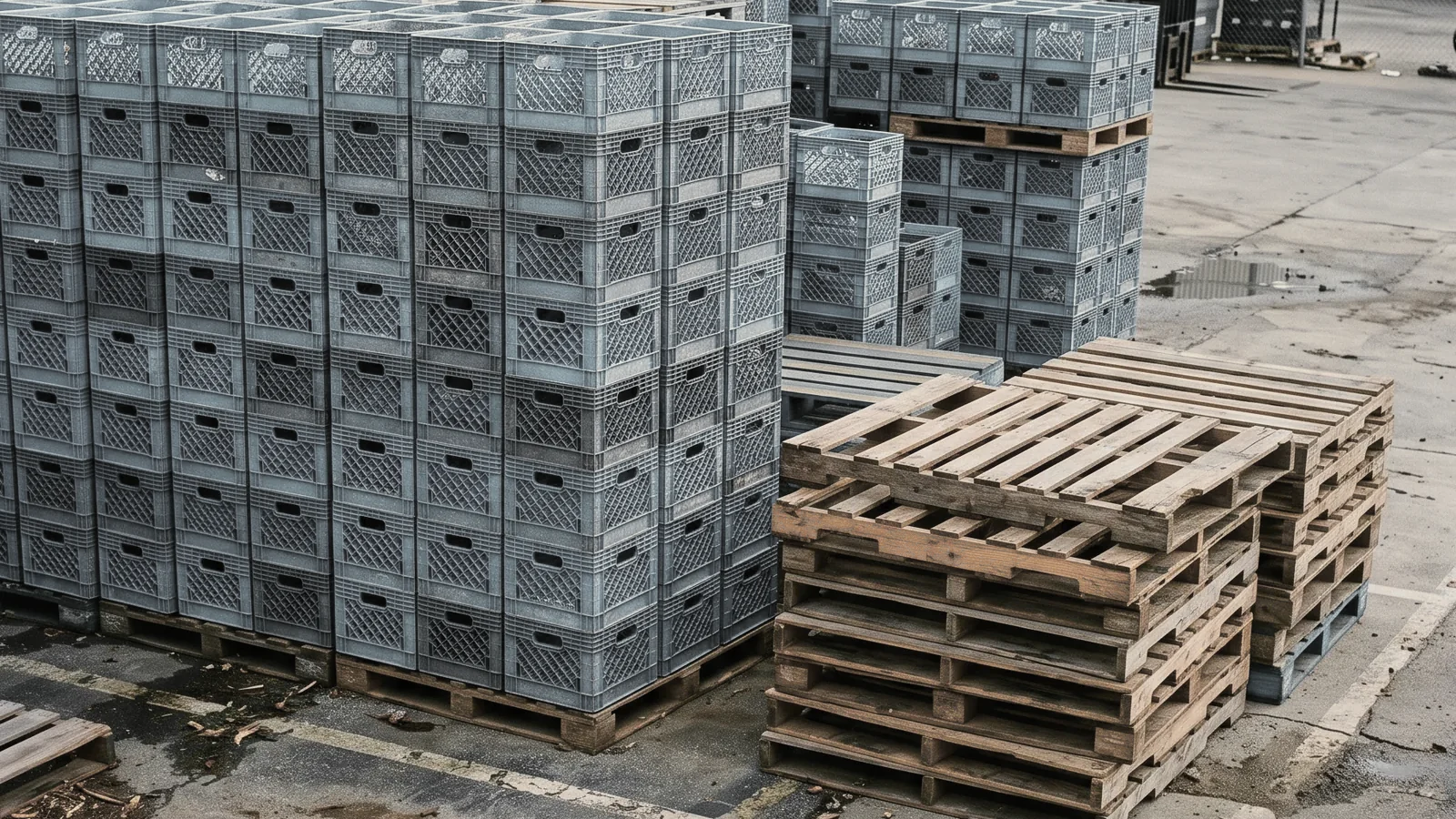
Returnable assets checked back in.
Looks like
Pallets on loan, by customer.
Adding context to movement
The useful version of fleet tracking connects the vehicle to the operation:
The route plan comes from your system: stops, time windows and what should be delivered at each.
The vehicle reports position and status, and where it matters, temperature and door events.
Each stop is compared with the plan: arrived late, stayed too long, skipped, or left the route.
Proof of delivery is recorded at the stop, linked to the order, not on a paper that comes back days later.
Exceptions reach the dispatcher, not every ping: the late stop, the long dwell, the open door.
A simple illustration
A fleet of 40 vehicles making 15 stops a day handles 600 stops. If 3% go wrong, a late arrival, a missed window, a disputed delivery, that is 18 exceptions a day. Knowing about them as they happen, rather than from customer calls the next morning, is the difference between managing a fleet and explaining it.
The question
Beyond its location, what do you know right now about each vehicle on the road?
Newsletter
Lessons from the floor, once a month.
One short read on where operations lose control and what it costs. No sales emails.