A carton station can read every tag and still leave the operator doing the technology's work. Rollout is more than installation.
24 Nov 2026 · 4 min read · Zorsan
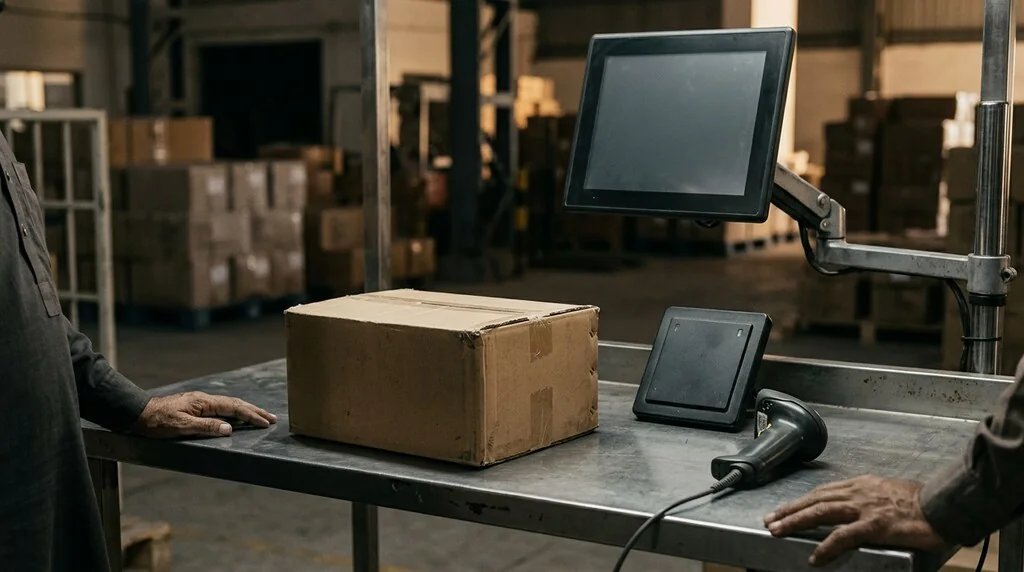
On a recent visit to an apparel factory, we watched a carton-verification station being prepared for use.
The set-up was simple: a table near dispatch, an RFID reader, a barcode scanner, a touchscreen and a verification application. The operator scanned the carton barcode, matched it to the order and placed the carton on the table. The system read the garments inside and checked them against what the order expected. It could also run offline, which suits a floor where work should not stop when the connection does.
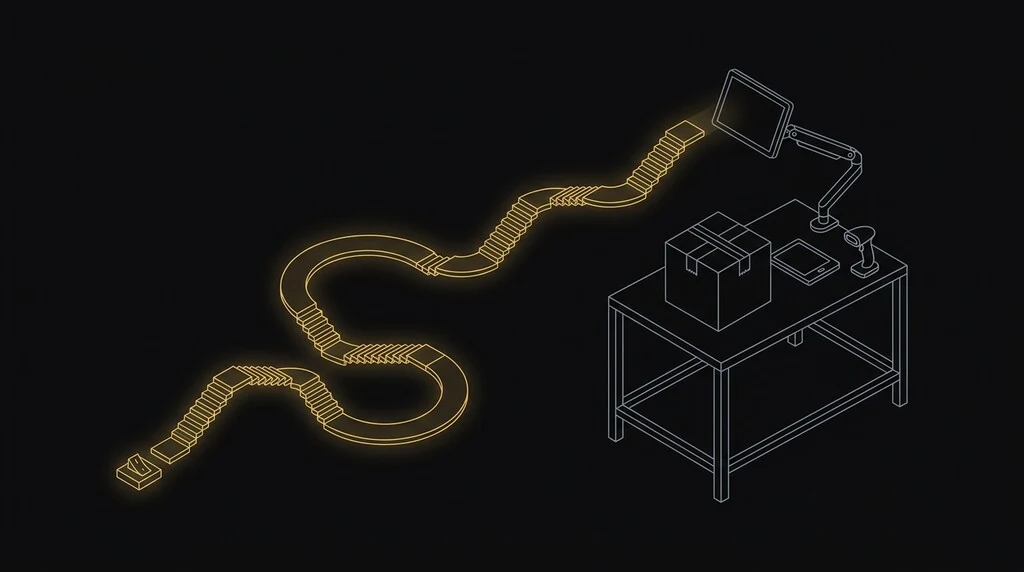
The equipment worked. What stood out was the training: switch on the power, start the computer, open the application, select the reader, enter credentials, connect, then begin. Each step made sense. Together they asked a dispatch operator to manage the technology before doing the job.
Installed is not the same as working
A reader identifies a tag. A working process turns that read into a dependable action: the item is recognised, matched to the right order, exceptions are handled, the transaction is recorded and the result reaches the people who need it.
That takes workflow design, a screen the operator can use, clear ownership, training, clean data, a way to recover when something fails, and a link to the systems the factory already runs. A station can be installed correctly and still have room to improve. That is not a failed project. It is where the real work starts.
Carton verification
What the report shows, and what the operator did.
Press the button to fold the start-up into one action.
What the report saysWhat the operator didThe friction
Power onstation started for the shift
Launchcomputer, application, login
Connectreader selected, link made, retried
Verifycarton read against the order
Releasethe report says: verified
When the station starts itself, the operator's time goes on the carton, not on the technology.
What the report does not show
A director sees that a shipment was verified and released. The report does not show the help needed at start-up, the repeated connections, the workarounds when a carton did not match, the manual reconciliation, or the one experienced person everyone calls.
We are not saying every factory has these. They are worth checking. A completed transaction proves the job was done, not how easily or how reliably. If the system does not record friction and exceptions, the most useful information for improvement stays invisible.
The cost is not only the operator
Where labour is inexpensive, automation is often measured against a salary. Take a worked example: an operator costs about $140 a month. An upgrade priced against that figure can look hard to justify, and sometimes it is.
But salary is one line. Rework, interruptions, repeated handling, manual reconciliation, shipment disputes and stock records nobody trusts sit in other lines. Measure those first. A few start-up steps per shift may cost very little. A recurring exception, or one slow handover that holds up a whole dispatch, may cost far more. The aim is not to build a case for RFID. It is to find where improvement is worth paying for.
Choose the set-up after you understand the floor
No single layout fits every textile or apparel factory. One job suits a handheld reader, another a fixed table, a dock door or a tunnel. Barcode or machine vision may be the better tool for some checks. Decide on workflow, volume, tag performance, physical conditions, system links and cost, not on the most expensive equipment.
Offline running is worth keeping where work cannot wait for a connection. The data can still reach the ERP, WMS or shipment system by synchronising and reconciling later. Working offline and being connected are not opposites.
What changes when rollout is designed
Start with one line, not the whole factory.
Map how the check happens today and decide what it must prove.
Cut the operator's job to one action per carton, with the technology starting by itself.
Agree what happens on a mismatch, a failed read or a lost connection, and who owns each.
Record exceptions as well as results, so management can see recurring friction.
Connect the record to the systems that need it, then measure reliability and capacity.
Add reading points only when the numbers support it.
Train people on the job and its exceptions, not only on the order of buttons. Supervisors need a clear escalation path. Management needs measures that show both results and friction.
Looking ahead to traceability
Apparel exporters face growing expectations on product information. The EU Digital Product Passport is one direction, but the textile-specific rules are still being written. RFID does not create a passport or prove where a material came from. Reliable identifiers, structured data and linked production and shipping records are the base any future requirement would build on. A verification station set up well today can feed that later.
The question
When the reader works, how many steps does your operator take before the carton? And what does your report not show?
Newsletter
Lessons from the floor, once a month.
One short read on where operations lose control and what it costs. No sales emails.