Presence
Confirm that the required component, product or pack item is present.
 Discuss a requirement
Vision inspection within Integration
Machine vision checks the details that identity alone cannot confirm. It can inspect presence, count, position, labels, packaging and product condition.
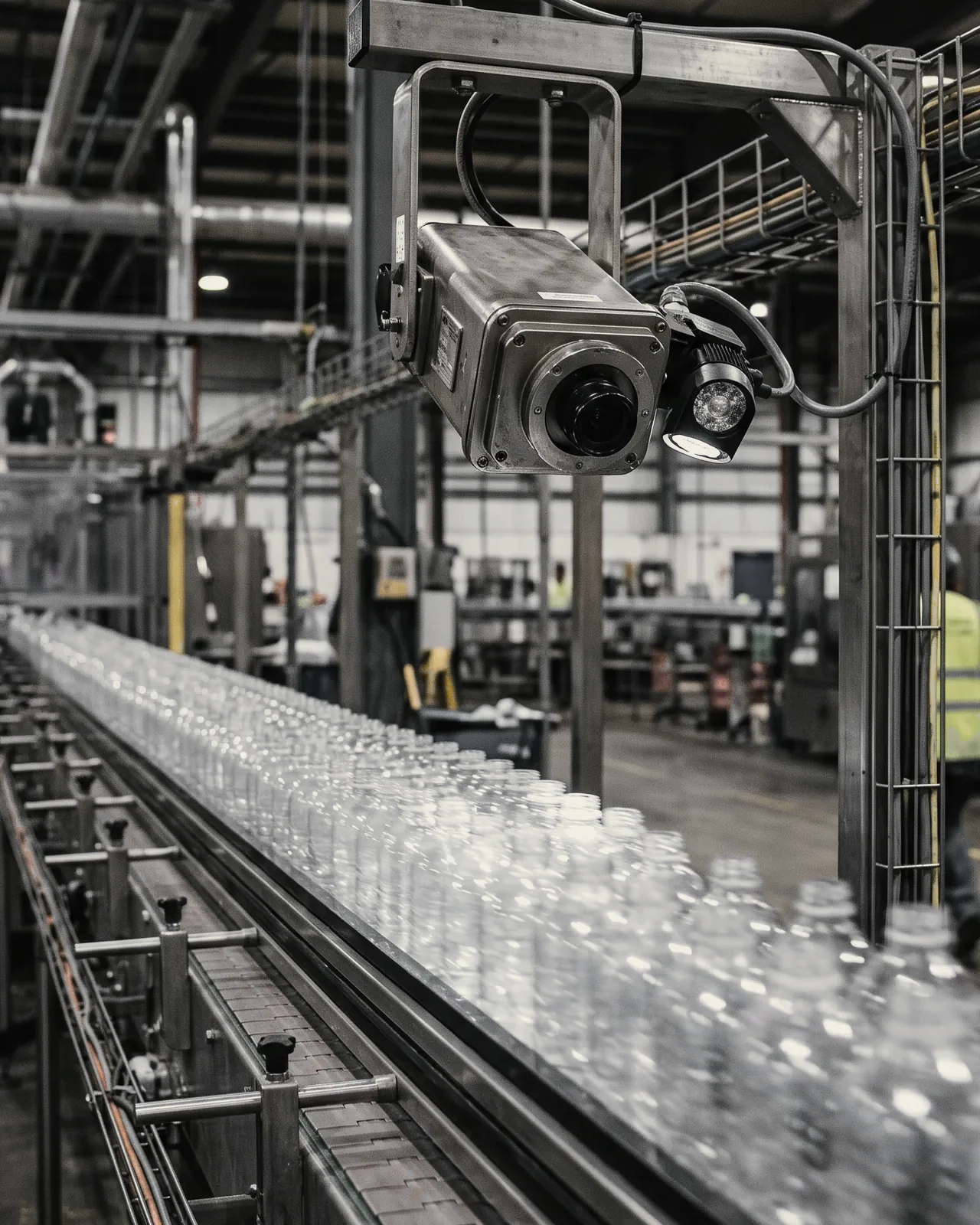
What the camera must decide
The right vision system combines lighting, optics, processing and rejection logic around a clearly defined inspection event.
Confirm that the required component, product or pack item is present.
Check that the expected quantity is complete before the process moves forward.
Verify placement, orientation and alignment against the production rule.
Validate the right label, code or printed element where it must appear.
Check closure, completeness and visible packaging condition.
Identify visible defects and classification differences at operational speed.
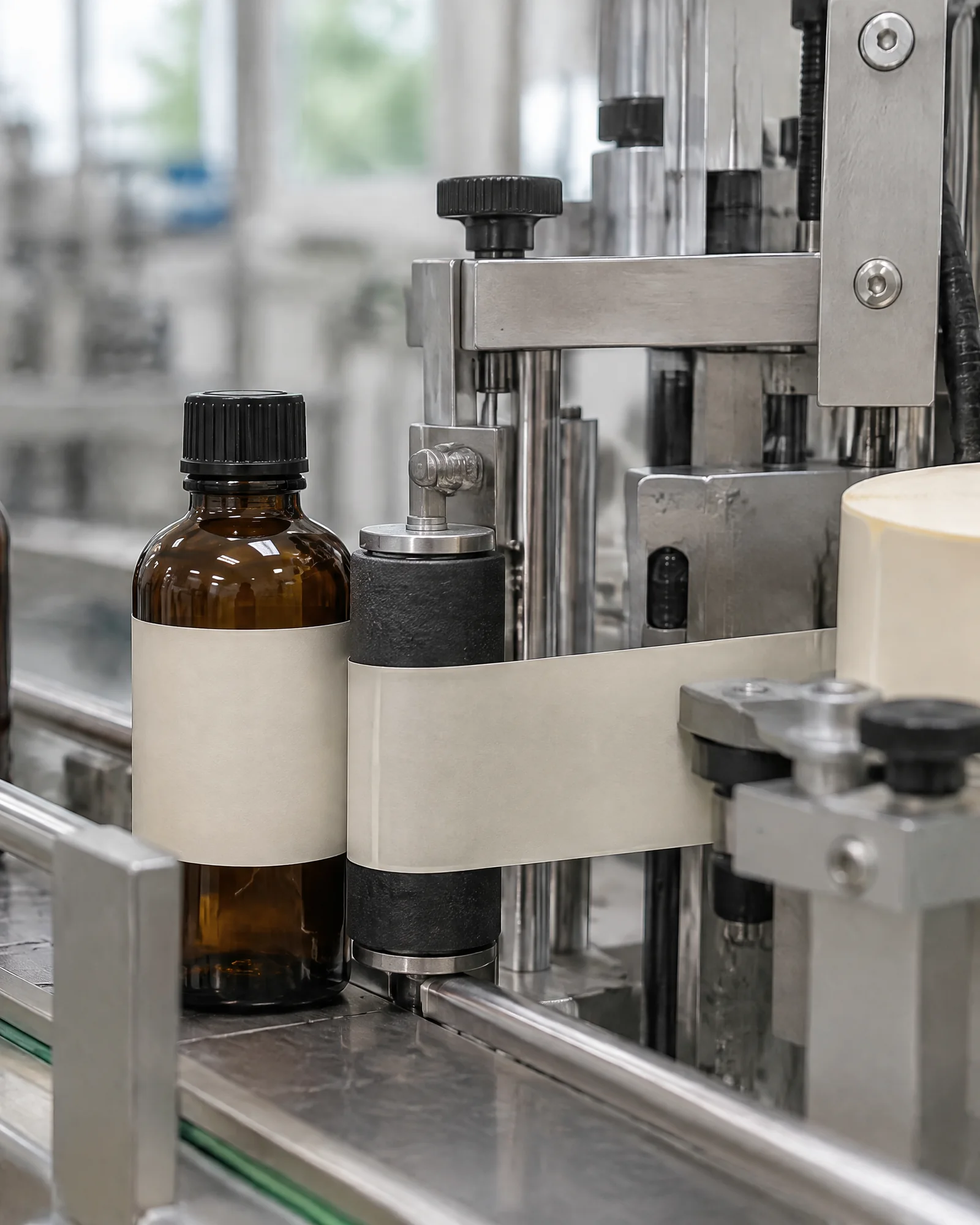
Vision plus identity
When vision and traceability work together, an inspection result can become part of the product record. This supports stronger evidence and faster exception handling.
Inspection architecture
Consistent inspection depends on the full environment rather than the camera alone.
Translate the operational concern into a visual rule that can be tested.
Choose lighting, lens, position and trigger conditions around the product.
Use the right vision method to classify the result and identify exceptions.
Record, reject, alert or stop the process according to the required response.
Inspection becomes more useful when the result belongs to the product history.
Packaging line
A cosmetics line, hundreds of units a minute. A person can check a few.
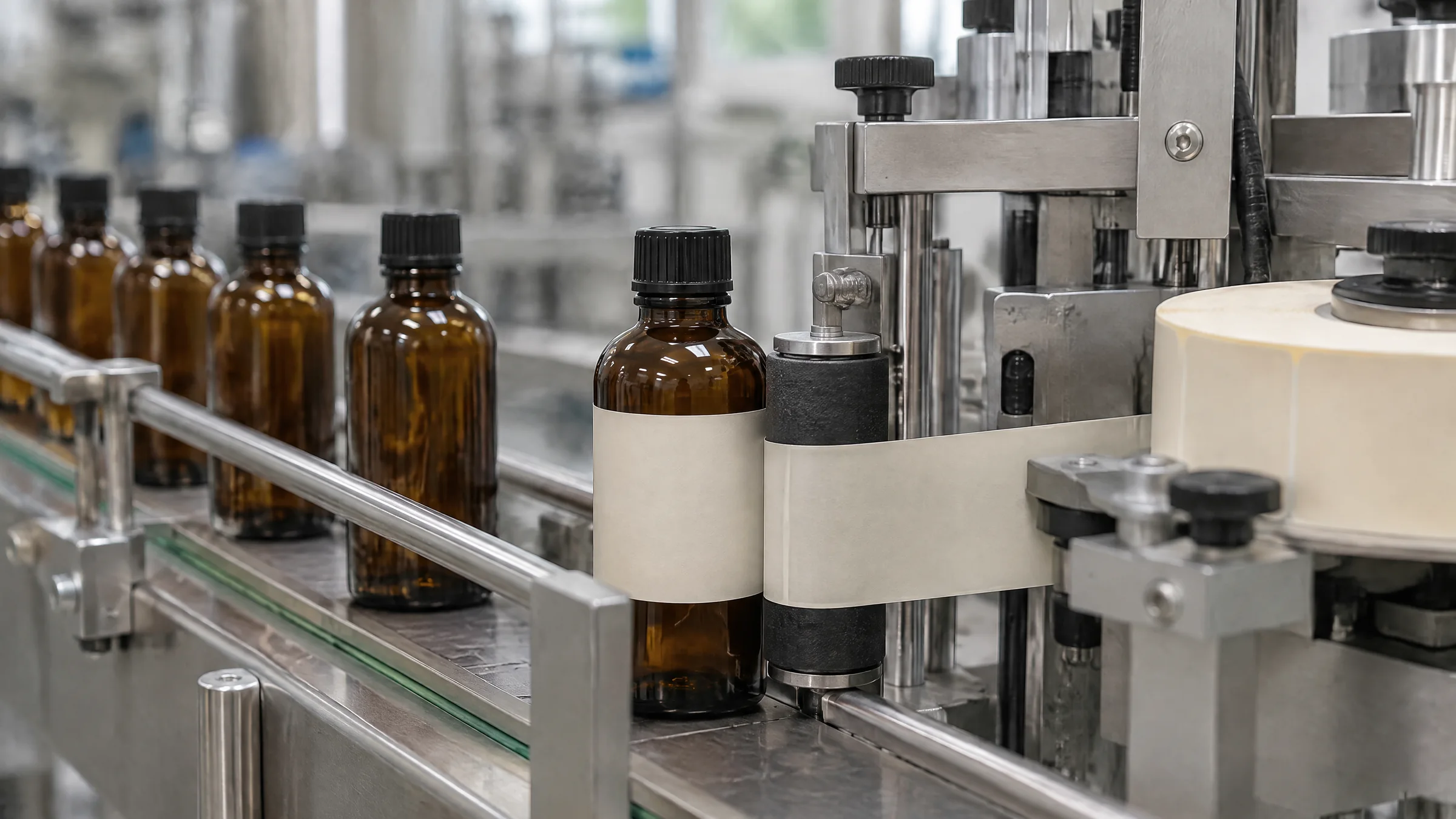
A camera after labelling checks every unit and rejects it at the line.
Quality on the line
Units move at line speed. A camera after the labeller checks every one; the wrong label is rejected before a whole batch carries it.
Scenarios
Two situations from production and packaging lines. The numbers are assumptions; replace them with your own.
Scenario 1
A food or cosmetics line labels 60 units a minute. A label roll from the wrong batch is loaded during a changeover.
Inspectors check a sample every half hour. By the time the wrong label is noticed, thousands of units carry it, and the batch must be relabelled or recalled.
A camera right after the labeller reads every label: product, batch code and date. The first wrong label stops the line within seconds.
At 60 units a minute, 30 minutes of wrong labels is 1,800 units to rework. Stopped after a few seconds, it is a handful.
Scenario 2
A distributor packs kits of six components for a service network.
Packers check kits by eye at the end of a long shift. Kits with a missing component reach workshops, where a job stops while a part is sent.
A camera over the packing station checks that every component is present before the kit is closed, and keeps an image of each kit as a record.
If 1 kit in 200 is incomplete on 1,000 kits a day, that is 5 stopped jobs a day at workshops, and 5 urgent deliveries.
In practice
Every inspection starts with a precise rule: what must be present, readable, aligned or free of defects, and what tolerance is acceptable. A rule that people can agree on can be checked by a camera every time.
Lighting, camera position and the moment of capture matter more than software. The check is designed around the line: its speed, the product, reflections and the space available.
A failed check can reject the item, stop the line or alert the supervisor. Every result is recorded by batch, so audits and customer complaints are answered with images, not memory.
Questions
Presence, count, position and orientation, labels and printed codes, packaging closure and condition, and visible product defects, at operational speed.
Consistent inspection depends on lighting, lens, camera position and trigger conditions chosen around the product. The image is controlled before it is interpreted.
The system records, rejects, alerts or stops the process according to the required response. With traceability, the inspection result can become part of the product record.
The product, the defect or rule to be checked, and the speed of the process.
Quality and process control
Share the product, the defect and the speed of the process.